Focus for Sport – How Important Is It?
As a growing group of sport and performance psychologists, we do a lot of work on focus and attention. But how important is focus compared to all the other mental skills required for consistently high performance?
Focus is arguably the most crucial mental skill of them all. High performance really isn’t possible without it. Because of this, it’s one of the areas of mental performance we work on the most. One quick and simple way to measure your current levels of focus is to complete one of our Mental Toughness Questionnaires here.
What Exactly Is Focus?
In psychology, ‘focus’ is defined as mentally attending to something while tuning out any other irrelevant incoming information. And like every other mental process, it plays an important role in helping keep us alive. Our survival ultimately depends on our ability to attend to stimuli and extract information from our surroundings. The ability to focus is a mental process that is present from birth. It plays a vital role in virtually every life domain.
Focus In The Performance Domain
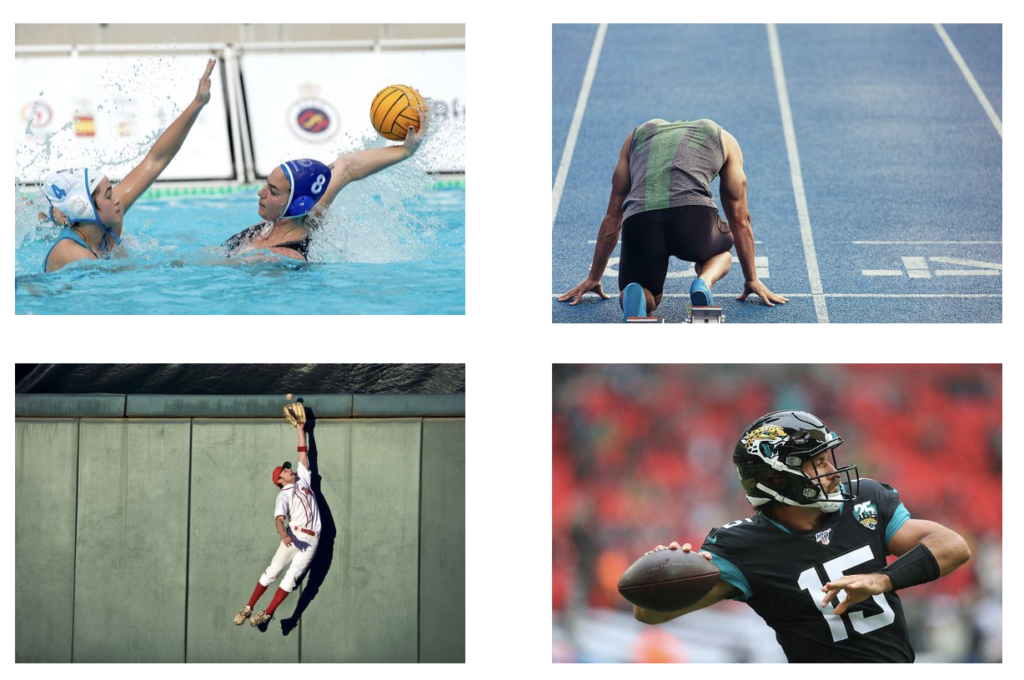
There are actually several different types of focus. But the two most relevant in the work we do are Focused Attention and Sustained Attention. During focused attention, we attend to a target stimulus for a given period of time. This lets us detect changes quickly and respond appropriately. Good examples from major sports would be:
-
- Cricket: The batter watches the ball and has to adjust their shot based on the bounce of the ball off the pitch.
-
- Tennis: The speed at which a player can react to a volley whilst focusing on the incoming ball.
-
- Baseball: Too many examples to list.
Sustained Attention
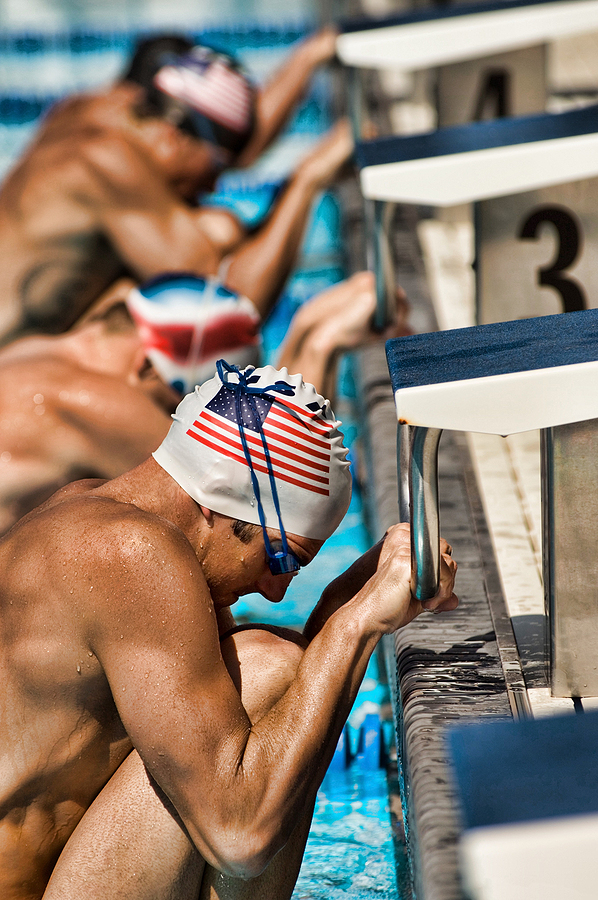
Sustained attention, commonly known as concentration, is when we focus on a task for an extended period. We give the task our full attention until it is over. We filter out irrelevant sensory information. Think long-distance and endurance sports, musical and theatrical performances, and even surgery. Basically, anything that requires an individual to concentrate for a prolonged period of time. A swimmer requires focused attention whilst on the blocks, followed by sustained attention during the race.
Because focus plays such a large role in high performance across sporting and non-sporting domains, it can be valuable to learn different ways to enhance and improve our focus.
Meditative Focus
The benefits of meditation extend beyond the general health benefits it’s commonly known for. In performance, meditation is commonly used to bring our attention to the present moment. Basically, this practice helps us focus better on the task at hand. Meditation is not about positive thinking nor about changing thoughts. At the end of the day, we have only some influence over our thoughts.
“As our clients know, it’s better to just accept your thoughts and get on with the job.”
Every single moment of the day we’re thinking about something. The purpose of meditation is actually to heighten our awareness of the present moment. This includes external experiences (sensory stimuli) and internal experiences (such as thoughts), observed without judgment. Or as little judgment as possible!
Screen Time And Sleep
Beyond meditation’s benefits for cognition and focus, sleep also plays an important role in these mental processes. Sleep deprivation can severely affect decision-making, alertness, memory, learning, and reaction time.
One of the biggest causes of sleep disruption today is screen time, especially when it’s close to bedtime.
Using electronic devices before sleep can significantly affect sleep quality. Research shows that people who use their mobile phones right before sleeping experience a decline in both focused and sustained attention. To improve sleep quality and reduce the impact of screen time on focus the next day, athletes and performers should avoid using their phones right before bed. One way to give yourself the best chance of a good performance is to switch off electronic devices as early as possible before bed.
Flow And Focus for Sport / Performance
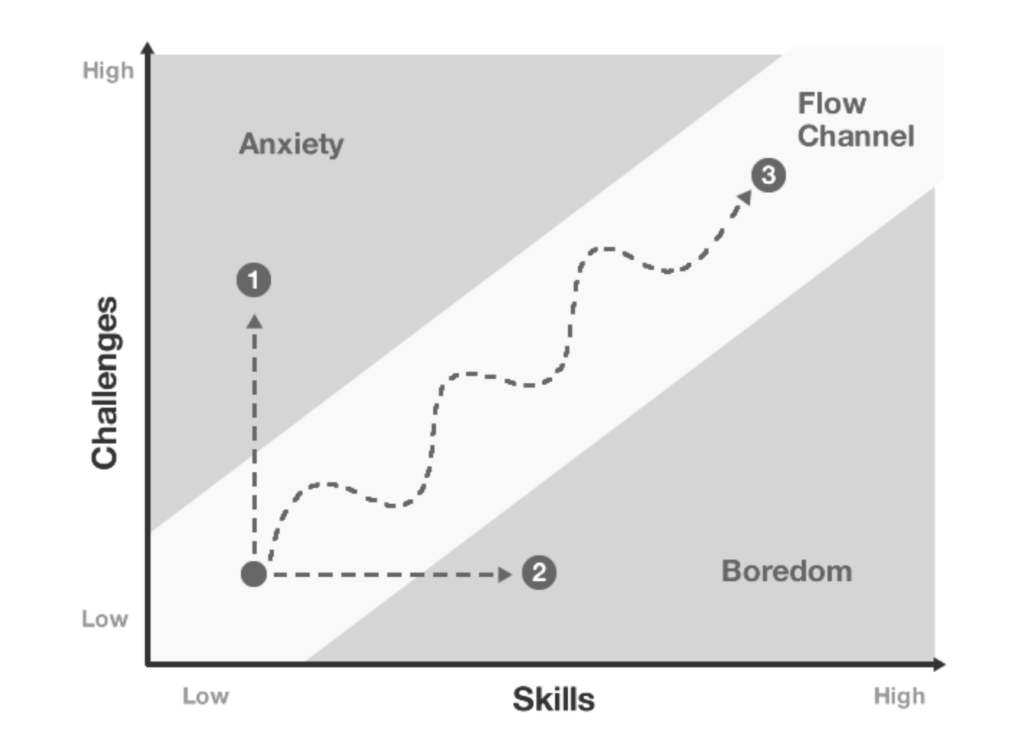
The word Flow is also thrown around in the sporting world when we talk about focus. Flow refers to a state where an athlete or performer is fully and completely immersed in what they’re doing. In this state, physical performance is heightened. This is because the individual is completely present, attending solely to the task and filtering out any irrelevant information.
Based on Flow Theory, individuals who struggle to focus or stay focused are probably experiencing one of two things. They’re either experiencing anxiety or boredom. The two variables at play here include the individual’s skill level and the difficulty of the task they have been asked to do. If an athlete’s skill level is relatively lower than the difficulty of the task, this often creates anxiety. On the other hand, if an athlete’s skill level is relatively higher than the task difficulty, this tends to lead to boredom. To create an environment where flow can occur, skill level and task difficulty need to be roughly equal.
Matching Skill Level and Task Difficulty
Matching skill level and task difficulty can be particularly tricky in a team or group setting where you have individuals of varying skill levels and experience. For athletes in a group training setting where the prescribed sets or drills are too “easy”, creating artificial constraints on performance or setting artificial thresholds for success to increase difficulty can help in keeping them engaged. For example, if a boxer is asked to spar against a less experienced opponent, setting higher point thresholds or introducing artificial rules to make the round more physically and mentally demanding might help them enter a state of flow.
Throwing a minimum of three strikes per combo, only leading with a feint or a double jab, or starting a combo with anything but a jab are some artificial rules that can be introduced to increase the difficulty of the round and help the athlete engage in the task where their experience level isn’t matched. For a swimmer hitting well below the times they need to hit during an endurance set, introducing a more difficult breathing pattern or a higher dolphin-kick benchmark off each wall might add physical and psychological constraints to a relatively easy set.
Athletes and performers should shift their thinking from what they can’t get out of a session to what they can. By artificially increasing task difficulty, we can help them engage more in the session, which increases the chance they leave feeling like they got something out of it.
Narrowing Your Focus
Sometimes we underestimate the value of setting objectives or targets for the session we’re about to do, or the week of training we’re about to commence. Narrowing our focus to a small selection of focus areas when we train (and even compete) is an attentional style that promotes concentration and helps us filter out all the irrelevant information around us.
I often find that athletes, particularly younger ones, struggle to engage during training and even on game day because they don’t know what to think about. They’re often trying to focus on too many things at once, which can lead to a lot of overthinking. For players who just can’t get their head in the game, this is most likely the reason why. Particularly during the development stage, when athletes are trying to learn a whole range of new skills, it can be hard to see them engaged in what they’re doing because they have to think about and remember so many different things. Trying to focus on so many different skill areas isn’t always the most efficient way to make progress, and it can be hard to see our progress and use it as motivation to keep going.
Focus Goals
To see more engagement, narrowing one’s focus can help. Choosing one or more areas of focus or ‘focus goals’ can help athletes know what to attend to. They can then bring their attention back to these if it wanders and stay engaged in what they’re doing. Clarifying these focus goals ahead of the session, week, or month also allows them to take ownership.
Focus goals allow athletes to recognise their progress more clearly and take accountability for their efforts during training and on game day. There is no real excuse for not knowing the objectives of the session or game. Increased accountability is a core part of the philosophy of our founding sport psychologist, Gareth J. Mole. This style of sport psychology can be confronting at first. But it is vital to the performance-enhancement side of what we do. The coaching side, as opposed to the counselling side.
Do You Need Help With Your Focus?
Focus is integral to any performance arena. If you’re an athlete or performer looking to develop some of these ideas further, please get in touch by completing our Contact Form here. Your focus can be improved, and qualified psychologists are the ideal teachers.
References
de Oliveira, M. L. C., de Nogueira Holanda, F. W., Valdez, P., de Almondes, K. M., & de Azevedo, C. V. M. (2020). Impact of electronic device usage before bedtime on sleep and attention in adolescents. Mind, Brain, and Education, 14(4), 376-386.
Csikszentmihalyi, M., Montijo, M. N., & Mouton, A. R. (2018). Flow theory: Optimising elite performance in the creative realm.
Lippelt, D. P., Hommel, B., & Colzato, L. S. (2014). Focused attention, open monitoring and loving-kindness meditation: effects on attention, conflict monitoring, and creativity–A review. Frontiers in Psychology, 5, 1083.
Marin, M. M., & Bhattacharya, J. (2013). Getting into the musical zone: trait emotional intelligence and amount of practice predict flow in pianists. Frontiers in Psychology, 4, 853.
Swann, C., Keegan, R. J., Piggott, D., & Crust, L. (2012). A systematic review of the experience, occurrence, and controllability of flow states in elite sport. Psychology of Sport and Exercise, 13(6), 807-819.
Yoshida, K., Takeda, K., Kasai, T., Makinae, S., Murakami, Y., Hasegawa, A., & Sakai, S. (2020). Focused attention meditation training modifies neural activity and attention: longitudinal EEG data in non-meditators. Social cognitive and affective neuroscience, 15(2), 215-224.